How Should Councils Govern AI in Social Care?
The five layers a council needs to put AI to work safely in social care: written policy, procurement test, workforce literacy, use-case register, published assurance.
Five places it is already happening, three mistakes that cost you, and the VERA:H framework that keeps the practitioner in charge.
Yes, with caveats. What UK GDPR, Social Work England standards and current research say about doing it safely.
Moravec's Paradox, Anthropic's emotion research, and why the answer is no for now. What practitioners need to understand about the future of AI in social work.
The difference between a policy and a framework. Five components every social care organisation needs before deploying AI.
AI text can be accurate and still feel wrong. Authorship dissonance explains why voice alignment matters more than factual correctness for professional trust.
AI transcription tools are generating hallucinations in social work records across 17 councils. The training gap makes this inevitable.
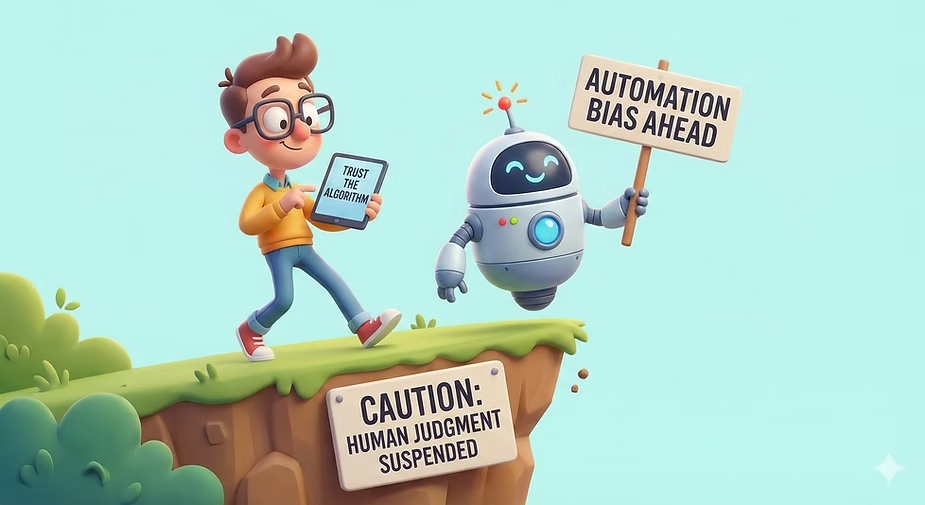
Why governance alone is not enough. Exploring automation bias, the moral crumple zone, and what social work needs to get right about AI.

Reasoning models like Co-pilot make invisible decisions about language and framing. What practitioners need to know about training data, accountability, and person-centred practice.
AI is rewriting social work assessments without practitioner consent. Why ethical training and co-produced systems both matter for adult social care.
We write about what matters to practitioners. If there is something you want covered, let us know.
Suggest a TopicFollow us on LinkedIn and Instagram for regular updates on ethical AI in social care. Practical tips, research findings, and governance guidance.
Explore our research or book a consultancy session to build your team's confidence in ethical AI.